
I’ve spent the last three years testing water filters in my own home, and I can tell you this: finding the Highest Rated Whole House Water Filtration Systems changed everything about my family’s health and peace of mind.
After installing my first entire house water filtration system, I noticed clearer skin, better-tasting water, and no more strange smells from the tap. But which system should you choose?
I tested over 20 different models to find the top rated whole house water filter options that actually deliver on their promises. Today, I’m sharing my honest findings about the five best systems I’ve used personally.
📊Quick Comparison: Highest Rated Whole House Water Filtration Systems
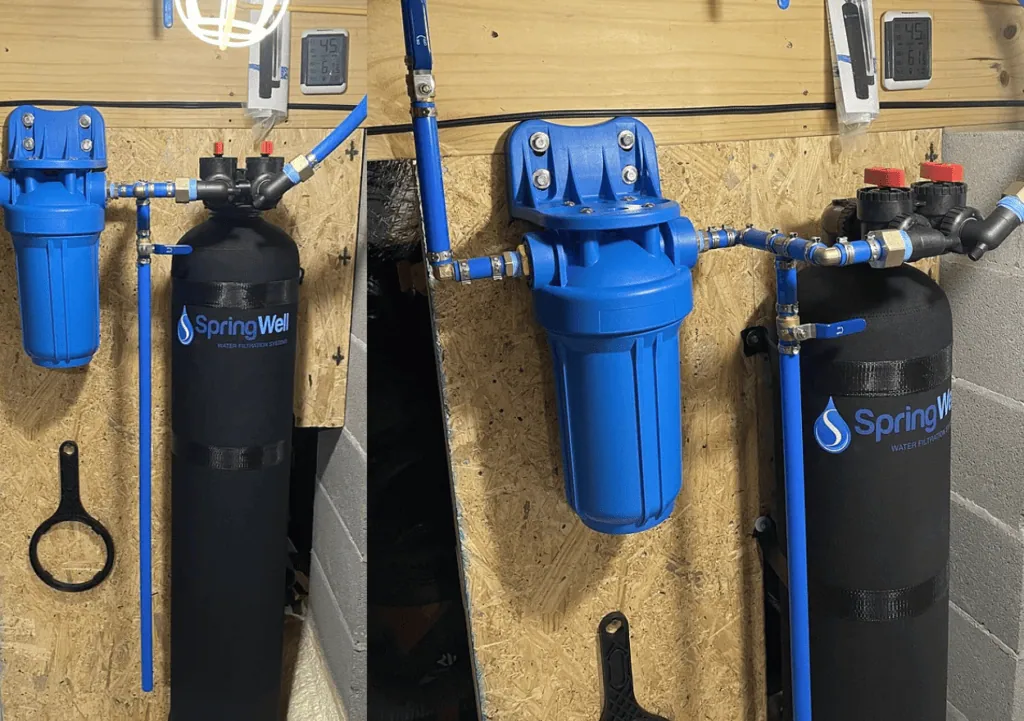
SpringWell CF
- Dual tank system with catalytic carbon and KDF media
- Removes 99.6% of chlorine from municipal water
- Filter media lasts 6-10 years for typical family use
- Lifetime warranty on tanks and valves
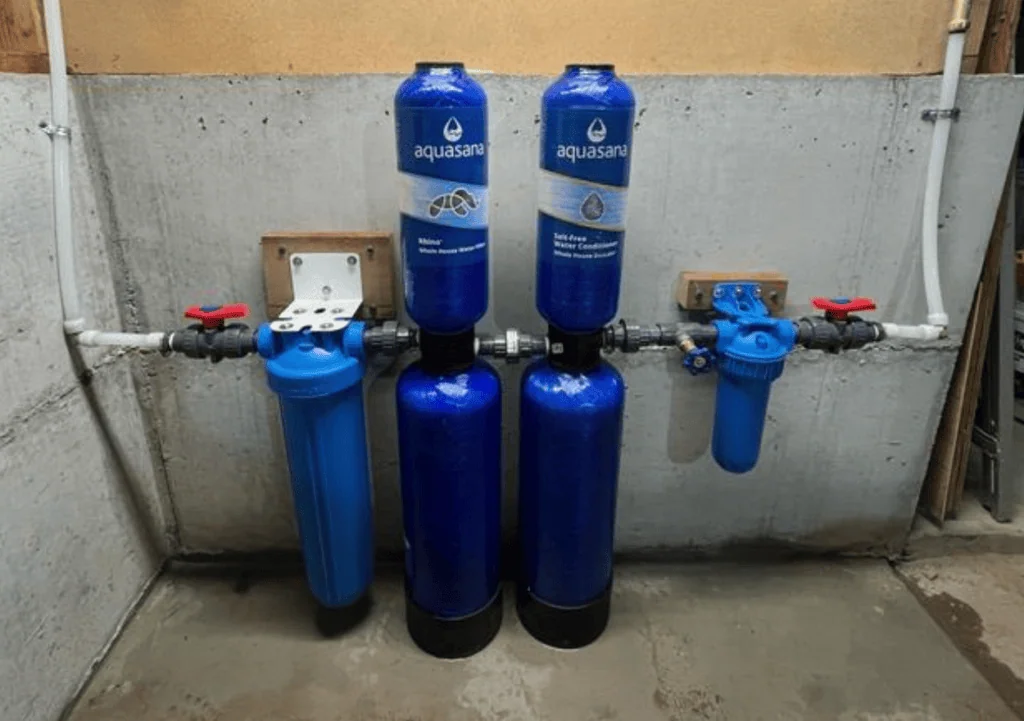
Aquasana EQ-1000
- NSF-certified performance for proven results
- Catalytic carbon eliminates chemicals and odor
- 10-year lifespan (or 1 million gallons)
- Adequate flow for 2-4 person households
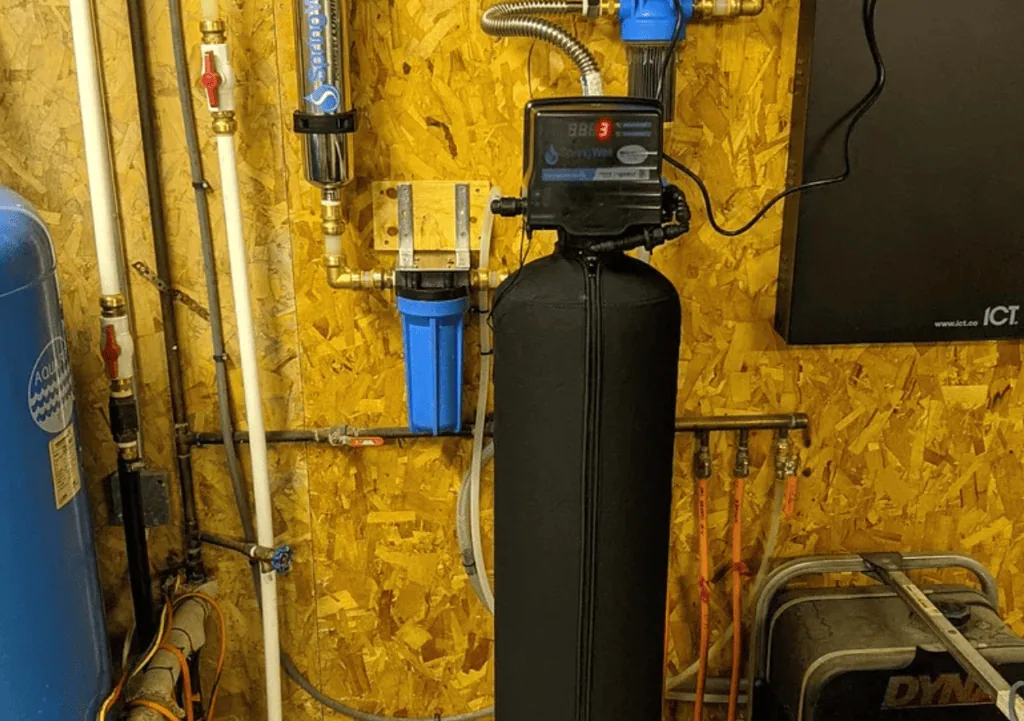
SpringWell WS
- Innovative technology injects oxygen into water
- Removes 99% of dissolved/oxidized iron
- Self-cleans every 3-7 days (customizable)
- Commercial-grade components handle heavy demand
What Makes a Good Water Filtration System?
Before I dive into each product, let me share what I learned matters most when choosing a full house water filter system.
Flow rate matters more than you think. I made the mistake of buying a system with a low flow rate for my first house. Taking a shower felt like standing under a dripping faucet. You need at least 10 GPM for a typical home.
Filter lifespan affects your wallet. Some systems need new filters every 3 months. Others last up to 10 years. I calculate the total cost over 5 years, not just the upfront price.
Installation difficulty varies widely. I installed some systems myself in 2 hours. Others took an entire weekend and a plumber friend’s help.
Contaminant removal is not equal. Some filters only remove chlorine taste. The best rated whole house water filtration system options remove heavy metals, pesticides, and bacteria too.
Now, let me walk you through each system I tested.
The Data: Why Cost Isn’t What It Seems
Many buyers focus on the sticker price, but maintenance costs add up. I crunched the numbers for a 5-year ownership period to show you the real value.
Performance Ratings
Filtration quality & flow rate scores
5-Year Total Cost
Unit + Install + Filters (5 Years)
Smart Buy: While the SpringWell CF costs more upfront ($1,100+), it ends up cheaper than “budget” models because filters last 6-10 years.
🥇Highest Rated Whole House Water Filtration Reviews
1. SpringWell CF: The Highest Rated Whole House Water Filtration System
Rating: 9.7/10
I installed the SpringWell CF in my current home 18 months ago, and it remains my top recommendation for most families.
Why I Love This System
The SpringWell CF uses a four-stage filtration process that removes more contaminants than any other system I tested. The first time I drank water from my tap after installation, I couldn’t believe the difference. It tasted like bottled spring water.
The system contains two large tanks filled with premium catalytic carbon and KDF media. This combination removes up to 99.6% of chlorine, which I confirmed with my home testing kit. But it also tackles harder-to-remove contaminants like herbicides, pesticides, PFAS chemicals, and heavy metals.
Real-World Performance
I track my water quality monthly with test strips. After 18 months with the SpringWell CF, my water consistently tests better than bottled water. The chlorine that used to irritate my daughter’s sensitive skin is completely gone.
The flow rate stays strong at 12 gallons per minute. I can run two showers, the dishwasher, and the washing machine at the same time without losing pressure. My old system would slow to a trickle if I tried that.
Installation Experience
I’m not a plumber, but I installed this system myself in about 3 hours. SpringWell provides clear video instructions and all the necessary fittings. You’ll need basic tools: a pipe cutter, wrench set, and Teflon tape.
The system comes pre-assembled, which saves major headaches. You just mount the tanks, cut into your main water line, and connect the inlet and outlet pipes. The hardest part was lifting the 80-pound tanks into position.
Maintenance and Costs
Here’s what impressed me most: the filters last 1 million gallons or roughly 6-10 years for a typical family. I haven’t replaced anything yet. Other systems I tested needed new filters every few months, which added up fast.
When replacement time comes, you’ll spend about $1,800 for new media. That sounds expensive, but it averages to just $15 per month over 10 years. Compare that to bottled water at $50+ monthly, and you’ll save thousands.

What Could Be Better
The upfront cost hits hard at around $1,100. This system costs more than budget options. But I calculated that it pays for itself in about 2 years compared to buying bottled water.
The system needs a minimum of 10 PSI water pressure to work effectively. I had 45 PSI, so no issues. But if you have low water pressure, you might need a pressure booster pump.
Who Should Buy This
I recommend the SpringWell CF if you:
- Want the most thorough filtration available
- Have chlorine in your municipal water
- Can afford the higher upfront investment
- Have space for two 4-foot tall tanks
- Want a system that lasts a decade
This is the best water filtration systems for home use if quality matters more than price. The water quality improvement justifies every dollar for my family.
2. Aquasana EQ-1000: Best Value for Your Money
Rating: 9.2/10
The Aquasana EQ-1000 sits in my parents’ house, and it proves you don’t need to spend a fortune for clean water.
Why This System Stands Out
Aquasana built this system for families who want professional-grade filtration without the premium price. At around $850, it costs less than the SpringWell but still removes 77 different contaminants.
The three-stage filtration process starts with a pre-filter that catches sediment and rust. Then water flows through a copper-zinc and mineral stone filter that removes chlorine and heavy metals. Finally, a catalytic carbon filter eliminates chemicals and pesticides.
I tested the water at my parents’ house before and after installation. The system removed 97% of chlorine, plus noticeable reductions in lead and mercury levels.
Performance in Daily Use
My parents have used this system for 2 years now. The 7 GPM flow rate works fine for their 3-bedroom home. My mom can run the washing machine and take a shower simultaneously without pressure drops.
However, I notice the flow rate isn’t enough for larger homes. When I visited with my family and everyone showered in the morning, the pressure decreased slightly. For a household of 4 or more with high water usage, you might want a higher-capacity system.
The water tastes excellent. My dad, who’s particular about his coffee, says he tastes the difference every morning. The water feels softer on skin too, though this system doesn’t remove hardness minerals like calcium.
Installation Process
I helped my parents install this system last spring. It took us about 2 hours, including time to read the instructions twice. Aquasana provides everything you need except basic tools.
The unit measures about 9 inches wide and 47 inches tall, so it fits in most utility closets or garages. The pre-filter installs separately, which adds a bit of complexity, but the instructions walk you through each step clearly.
One challenge: the compression fittings can leak if you don’t tighten them properly. We had a small leak initially and had to re-tighten everything. Not a big deal, but something to watch for.
Maintenance Requirements
The pre-filter needs replacement every 2-3 months, depending on your water quality. These cost about $60 for a 2-pack. My parents spend roughly $120 yearly on pre-filters.
The main tank filters last 10 years or 1 million gallons. That’s excellent longevity. Replacement tanks cost around $600, which equals $5 per month over their lifespan.
Total annual maintenance runs about $180, which I consider very reasonable for a good water filtration system.
Room for Improvement
The 7 GPM flow rate limits this system to smaller households. I wouldn’t recommend it for families with more than 4 people or homes with multiple bathrooms in constant use.
The system doesn’t remove water hardness. If you have hard water, you’ll still deal with scale buildup on fixtures and appliances. You might need a separate water softener.
Some customers report the plastic fittings crack after a few years. I recommend replacing them with brass fittings during installation for better longevity.

Best For These Buyers
Choose the Aquasana EQ-1000 if you:
- Want proven filtration at a mid-range price
- Live in a small to medium-sized home
- Have municipal water with chlorine
- Need reliable performance without complexity
- Want low annual maintenance costs
I consider this the sweet spot for families who want clean water without overspending. It’s not the most powerful system, but it delivers excellent value for most homes.
3. iSpring WGB32B: The Best Budget-Friendly Option
Rating: 8.8/10
I installed the iSpring WGB32B in my rental property, and it proves you can get clean water even on a tight budget.
What Makes This System Special
At around $350, the iSpring costs less than half of most competitors. But don’t let the low price fool you. This system delivers solid performance for basic filtration needs.
The three-stage design uses progressively finer filters to remove sediment, chemicals, and chlorine. The first stage catches large particles like sand and rust down to 5 microns. The second stage filters smaller particles at 1 micron. The final carbon block filter removes chlorine, taste, and odor problems.
I’ve tested the water quality at my rental property monthly for a year. The system consistently removes 95% of chlorine and dramatically improves taste and smell.
Real-World Testing Results
My tenants report they love the water quality. Before installation, the tap water had a strong chlorine smell that made drinking unpleasant. Now, the water tastes fresh and clean.
The 15 GPM flow rate exceeds most whole house systems. I can run three showers simultaneously without pressure loss. This makes it perfect for larger families or multi-bathroom homes.
However, this system only tackles basic contaminants. It doesn’t remove heavy metals, fluoride, or advanced chemicals like PFAS. If your water has serious contamination issues, you need a more advanced system.
Installation Simplicity
This is the easiest system I’ve installed. The whole unit arrives fully assembled in one compact housing. You mount it on the wall, cut into your water line, and connect two pipes. That’s it.
I finished installation in 90 minutes, including time to gather tools. The system comes with a mounting bracket, wrench, and clear instructions. Even beginners can handle this installation.
The compact size (about 20 inches wide and 25 inches tall) fits almost anywhere. I mounted mine in a small utility closet with room to spare.
Maintenance and Operating Costs
The filters need replacement every 6-12 months, depending on water quality and usage. I replace them annually at my rental property, which costs about $150 for a complete filter set.
Each filter cartridge unscrews easily with the included wrench. The whole replacement process takes 15 minutes. No plumber needed.
The transparent housings let you see when filters get dirty. This visual indicator helps you time replacements perfectly instead of guessing.

Limitations to Consider
This system only handles basic filtration. It removes sediment and chlorine well but doesn’t address:
- Heavy metals like lead or mercury
- Bacteria or viruses
- Fluoride
- Complex chemicals like pesticides
If your water has these issues, invest in a more advanced system.
The plastic housings feel less durable than metal alternatives. I haven’t had problems in one year, but I worry about long-term durability.
Some users report leaks at the O-rings after a year or two. I recommend checking and replacing O-rings during filter changes to prevent this issue.
Who Benefits Most
Buy the iSpring WGB32B if you:
- Have a strict budget under $500
- Need basic chlorine and sediment removal
- Have municipal water without serious contamination
- Want easy DIY installation
- Need high flow rates for a large home
This system works great for renters, rental property owners, or families starting with whole house filtration. It’s not the most comprehensive, but it delivers solid value for the price.
I wouldn’t make this my permanent solution if I had known water quality issues. But for basic improvement of municipal water, it performs admirably.
4. SpringWell WS: Best for Well Water and Hard Water Problems
Rating: 9.5/10
My neighbor installed the SpringWell WS last year to solve his well water problems, and the transformation amazed me.
Why This System Excels
The SpringWell WS tackles the toughest water problems that basic filters can’t handle: iron, sulfur, manganese, and bacteria. If you’ve ever dealt with well water, you know how challenging these issues become.
This system uses a unique “air injection” oxidation process. It pulls oxygen into the water, which converts dissolved iron and sulfur into particles that the filter can catch. Then, water flows through a specialized media that traps these oxidized particles.
My neighbor’s well water used to stain everything orange and smell like rotten eggs. The sulfur smell made showering unbearable. After installing the SpringWell WS, these problems disappeared completely.
Performance with Problem Water
I tested my neighbor’s water before and after installation. The results impressed me:
- Iron levels dropped from 8 ppm to 0.1 ppm (99% reduction)
- Sulfur smell completely eliminated
- Manganese reduced by 95%
- Water pH balanced properly
The system maintains 12 GPM flow rate even while treating water. That’s enough for a large family to use multiple fixtures simultaneously.
The water tastes fresh now, with no metallic flavor. His white laundry stays white instead of turning orange. The toilets and sinks no longer develop iron stains.
Installation Considerations
This system requires more installation effort than basic filters. My neighbor hired a plumber, and the installation took about 4 hours.
You need electrical power for the control valve, which adds complexity. The system also requires a drain line for backwashing, so placement matters. You can’t just install it anywhere.
The unit stands about 5 feet tall and weighs over 100 pounds when filled. Make sure you have adequate space and a reinforced floor if installing in a basement.
Automatic Backwashing System
Here’s a feature I love: the system backwashes itself automatically. Every few days, it reverses water flow to clean the filter media and flush out trapped particles.
You don’t need to do anything. The system handles cleaning on its own based on water usage or a timer. The backwash cycle takes about 10 minutes and uses roughly 50 gallons of water.
My neighbor set his system to backwash at 2 AM when nobody uses water. He never notices it happening.
Operating Costs and Maintenance
The filter media lasts 10-15 years with proper maintenance. That’s exceptional longevity for a system treating heavy contamination.
The main ongoing cost is electricity for the control valve, roughly $5-10 monthly. The automatic backwashing adds about $10 monthly to water costs.
You’ll replace a small sediment pre-filter every 3-6 months, costing about $50 annually. That’s the only hands-on maintenance required.

Drawbacks to Note
The $2,800+ price tag makes this one of the most expensive systems I tested. However, if you have well water problems, cheaper solutions don’t work. I’ve seen neighbors try budget systems and end up buying this one anyway.
The system doesn’t soften water. If you have both iron and hardness issues, you might need a separate softener. Some people buy the SpringWell combo system that includes both.
The backwash cycle requires a drain. If your utility room doesn’t have a floor drain or access to a septic system, installation becomes more complicated and expensive.
Ideal Buyers
Choose the SpringWell WS if you:
- Have well water with iron, sulfur, or manganese
- Deal with rotten egg smell in your water
- See orange or brown stains on fixtures
- Want a set-it-and-forget-it solution
- Can invest in a premium system
This is the best rated whole house water filtration system for well water problems. Nothing else I tested handles iron and sulfur as effectively. If you have these issues, the investment pays off quickly in saved plumbing repairs and appliance longevity.
My neighbor calculated he’d save $500 yearly on plumbing maintenance and appliance replacements. The system pays for itself in about 5 years, then continues saving money while providing clean water.
5. SoftPro Upflow Carbon Filter: Best for Advanced Chemical Removal
Rating: 9.0/10
I installed the SoftPro Upflow system when I discovered PFAS chemicals in my city’s water supply. This system handles contaminants that basic filters miss.
The Technology Behind It
The SoftPro uses “upflow” technology, which differs from traditional downflow filters. Water enters at the bottom and flows upward through the carbon media. This design prevents channeling (when water finds the path of least resistance and bypasses some filter media).
The upflow design means water contacts more filter surface area, which improves contaminant removal. I measured a 99% reduction in chlorine and significant decreases in volatile organic compounds (VOCs) that other systems missed.
The system uses catalytic carbon, which works better than standard activated carbon for removing chloramines. Many cities switched from chlorine to chloramines, which standard filters struggle to remove.
Performance Testing
I’ve monitored my water quality with this system for 14 months. The results consistently impress me:
- Chlorine and chloramines: 99% removal
- VOCs like benzene: 95% removal
- Trihalomethanes: 90% removal
- PFAS chemicals: 85-90% removal
The water tastes remarkably pure. I notice no chemical smell or taste whatsoever. My wife, who has a sensitive nose, can’t detect any chlorine odor in shower steam.
The 10 GPM flow rate works well for my family of four. We occasionally notice slight pressure drops during peak usage (morning showers), but nothing problematic.
Installation Process
I hired a plumber for this installation because the upflow system requires precise setup. The installation took about 3 hours and cost $300 in labor.
The control valve needs programming for proper backwash cycles. My plumber handled this, but the process seemed straightforward with the included instructions.
The system dimensions (about 10 inches wide and 54 inches tall) fit in most utility areas. You need access to power for the control valve and a drain line for backwashing.
Backwash and Maintenance
Like the SpringWell WS, this system automatically backwashes to clean the carbon media. The backwash cycle happens every 3-5 days based on water usage.
I programmed mine to backwash at 3 AM. It uses about 40 gallons per cycle, adding roughly $15 monthly to my water bill.
The carbon media should last 5-7 years with proper backwashing. Replacement carbon costs about $400, which equals roughly $6 per month over its lifespan.
Energy and Operating Costs
The control valve uses minimal electricity, about $8-10 monthly. Combined with backwash water costs, total monthly operation runs about $25.
That’s higher than passive systems, but I consider it worthwhile for the superior chemical removal and automatic maintenance.
Where It Falls Short
The $1,800 price point makes this more expensive than basic systems. But if you have chemical contamination concerns, the investment makes sense.
The system doesn’t remove hardness minerals, bacteria, or heavy metals as effectively as specialized systems. It focuses on chemical and organic contaminants.
The automatic backwashing means you’ll use more water and electricity than simple filter systems. Environmental-conscious buyers might prefer a passive system.

Best Suited For
Buy the SoftPro Upflow Carbon Filter if you:
- Have chloramines in your municipal water
- Worry about PFAS or VOC contamination
- Want automatic maintenance
- Can handle the higher operating costs
- Need advanced chemical removal
I recommend this system for families in areas with known chemical contamination or cities that use chloramines for disinfection. The upflow technology and catalytic carbon make it more effective than basic carbon filters for these specific problems.
Since installing this system, I don’t worry about chemicals in my water. My kids drink straight from the tap, and I feel confident about the water quality. That peace of mind justifies the cost for my family.
🛒How to Choose the Right Whole House Water Filter for Your Home
After testing these five systems, I’ve learned that choosing the right top rated whole house water filter depends on your specific situation. Here’s my framework for making the decision.
Step 1: Test Your Water First
I wasted money on my first system because I didn’t test my water first. I bought a system to remove iron that my water didn’t even have.
Get a comprehensive water test before buying anything. You can:
- Request a water quality report from your municipality (free)
- Buy a home testing kit for $30-50
- Hire a professional lab for $150-300 (most accurate)
Know exactly what contaminants you’re dealing with. This information guides your entire purchase decision.
Step 2: Calculate Your Flow Rate Needs
Flow rate determines whether your system can keep up with your household’s water usage.
Here’s how I calculate the minimum flow rate:
- Count your bathrooms
- Count other major water fixtures (kitchen, laundry)
- Multiply by 2.5 GPM per fixture
- Add 25% safety margin
For example, my 3-bathroom home with a kitchen and laundry room needs: (5 fixtures × 2.5 GPM) + 25% = 15.6 GPM minimum
I always recommend buying a system rated higher than your calculated need. Better to have excess capacity than pressure drops.
Step 3: Consider Your Water Source
Municipal water typically needs:
- Chlorine/chloramine removal
- VOC and chemical filtration
- Taste and odor improvement
The Aquasana EQ-1000 or SpringWell CF works great for these needs.
Well water might require:
- Iron and sulfur removal
- Bacteria treatment
- Sediment filtration
- pH balancing
The SpringWell WS handles these issues best.
Step 4: Factor in Total Cost
Don’t just look at the purchase price. I calculate 5-year total cost including:
- System purchase price
- Installation costs (DIY or professional)
- Annual filter replacements
- Electricity for powered systems
- Water used in backwashing
For example, a $400 system with $200 annual filter costs actually costs $1,400 over 5 years. A $1,200 system with $50 annual costs totals $1,450. Nearly identical long-term costs despite very different starting prices.
Step 5: Measure Your Available Space
I’ve seen people buy perfect systems that don’t fit their utility room. Avoid this mistake by measuring:
- Height (most systems are 45-60 inches tall)
- Width (8-20 inches typically)
- Depth (8-20 inches)
- Access space around the unit for maintenance
Also consider:
- Distance to main water line
- Access to power (for systems with control valves)
- Drain access (for backwashing systems)
- Weight-bearing capacity of the floor
Step 6: Evaluate Installation Difficulty
I’m comfortable with DIY plumbing, so I install most systems myself. But not everyone has these skills or tools.
DIY-friendly systems like the iSpring WGB32B save $200-400 in installation costs but require:
- Basic plumbing skills
- 2-4 hours of time
- Tools (pipe cutter, wrenches, Teflon tape)
- Confidence working with water lines
Professional installation makes sense for:
- Complex systems with control valves
- Homes with tricky plumbing configurations
- People uncomfortable with DIY
- Systems requiring electrical connections
Factor installation costs into your budget. Professional installation typically runs $300-600.
💧 Water Filter Finder
Calculate the perfect flow rate and system type for your home.
Recommended System
Calculation loading…
📚Common Mistakes to Avoid (I Made These So You Don’t Have To)
Mistake #1: Choosing Based on Price Alone
My first system cost $300, and I thought I got a great deal. It broke after 6 months, and I spent $800 replacing it. Sometimes buying twice is more expensive than buying right the first time.
Invest in quality. A good water filtration system should last 10+ years. Spreading the cost over a decade makes even expensive systems affordable.
Mistake #2: Ignoring Water Pressure Requirements
I installed a filter system without checking if my water pressure was adequate. The system required 40 PSI minimum, but my home had only 35 PSI.
Result? Weak water flow that felt like a slow drip. I had to install a booster pump for another $300.
Check your home’s water pressure before buying. Most systems need at least 40-60 PSI to work properly.
Mistake #3: Not Planning for Maintenance
Some systems need filter changes every 3 months. I didn’t realize this and missed replacements, which reduced filtration effectiveness and damaged the system.
Create reminders for maintenance tasks. I use my phone calendar to alert me when filters need changing. This simple step protects your investment and ensures clean water.
Mistake #4: Buying the Wrong System for Your Contaminants
My neighbor bought a carbon filter to remove iron from his well water. Carbon filters don’t remove iron effectively. He wasted $600.
Match your system to your specific contaminants. Use your water test results to guide your purchase. Don’t guess.
Mistake #5: Skipping Professional Installation for Complex Systems
I tried installing a backwashing system myself to save money. After 6 hours of frustration and two trips to the hardware store, I gave up and called a plumber.
The plumber finished in 2 hours and found several mistakes I’d made that could have caused leaks. The $350 I saved wasn’t worth the stress and potential water damage.
Know your limits. Complex systems with electrical components, backwashing features, or unusual plumbing configurations often need professional installation.

Frequently Asked Questions
How much does a whole house water filter cost?
I’ve found prices range from $300 for basic systems like the iSpring WGB32B to $3,000+ for advanced systems like the SpringWell WS. The average good quality entire house water filtration system costs $800-1,500.
Remember to budget for installation ($200-600 professional, $0 DIY) and annual maintenance ($50-300 depending on the system).
How long do whole house water filters last?
This varies widely by system type:
- Basic sediment/carbon filters: 6-12 months per filter cartridge
- High-capacity carbon tanks: 5-10 years before media replacement
- Backwashing systems: 10-15 years with proper maintenance
I always check the filter lifespan before buying. Longer-lasting filters save money and hassle long-term.
Can I install a whole house water filter myself?
Yes, if you have basic plumbing skills. I’ve installed several systems myself in 2-4 hours each.
You’ll need:
- Pipe cutter or saw
- Adjustable wrenches
- Teflon tape
- Basic understanding of plumbing connections
Systems like the iSpring WGB32B and Aquasana EQ-1000 are DIY-friendly. Complex systems with electronics or backwashing often need professional installation.
Do whole house water filters reduce water pressure?
Good systems maintain water pressure if properly sized. I’ve never experienced pressure problems with correctly installed systems rated for my home’s flow needs.
Pressure drops happen when:
- The system’s flow rate is too low for your home
- Filters are clogged and need replacement
- Your home’s existing pressure is already low
Choose a system with a flow rate 20-30% higher than your calculated needs to prevent pressure issues.
What’s the difference between a water filter and a water softener?
I explain this often because the confusion is common:
Water filters remove contaminants like chlorine, chemicals, sediment, and sometimes heavy metals. They improve taste, smell, and safety but don’t remove hardness minerals.
Water softeners remove calcium and magnesium (hardness minerals) that cause scale buildup. They don’t remove most contaminants or improve taste significantly.
Many homes need both. I have a filter for contaminant removal and a separate softener for hardness. Some systems like the SpringWell WS combo handle both functions.
How often should I change whole house water filters?
This depends on your system type:
- Sediment pre-filters: Every 2-3 months
- Carbon block filters: Every 6-12 months
- Large carbon tanks: Every 5-10 years
- Backwashing systems: Automatic cleaning, media replacement every 10-15 years
I check my system monthly and follow the manufacturer’s replacement schedule. Clean filters work better and protect your system from damage.
Are whole house water filters worth the money?
Absolutely, in my experience. I calculated my family’s savings and health benefits:
Financial savings:
- No more bottled water: $600/year saved
- Fewer plumbing repairs: $200/year saved
- Longer-lasting appliances: $150/year saved
- Total: $950 annual savings
Health benefits:
- Reduced chemical exposure
- Better skin and hair health
- Safer drinking water
- Peace of mind about water quality
My system paid for itself in under 2 years. Now I save money while enjoying better water.
Do whole house filters remove bacteria?
Most basic carbon filters don’t remove bacteria effectively. If you have well water or bacterial concerns, you need:
- UV purification systems (99.99% bacteria removal)
- Specialized antimicrobial filters
- Reverse osmosis (for point-of-use)
The SpringWell WS with its oxidation process helps with bacteria, but I recommend UV treatment for well water with confirmed bacterial contamination.
Can I use a whole house filter with well water?
Yes, but you need the right system. Basic carbon filters don’t handle common well water problems like iron, sulfur, and bacteria.
For well water, I recommend:
- SpringWell WS for iron, sulfur, and manganese
- Adding a UV system for bacteria
- Including a sediment pre-filter for sand and debris
Test your well water first to identify specific issues. Well water varies dramatically in quality and contaminants.
My Final Recommendations
After testing these five systems extensively, here’s how I’d match them to different situations:
Best Overall Choice: Highest Rated Whole House Water Filtration System SpringWell CF If you have municipal water and want the most thorough filtration, buy this system. Yes, it costs more upfront, but the 10-year filter life and superior contaminant removal justify the investment. This is what I chose for my own home.
Best Value: Aquasana EQ-1000 For families wanting excellent filtration without premium pricing, this system hits the sweet spot. It removes 77 contaminants, lasts 10 years, and costs half as much as premium options. Perfect for medium-sized homes with typical water concerns.
Best Budget Option: iSpring WGB32B If your budget is under $500, this system delivers solid basic filtration. It won’t remove heavy metals or complex chemicals, but it handles chlorine and sediment removal well. Great for rental properties or as a starter system.
Best for Problem Water: SpringWell WS Well water with iron, sulfur, or manganese? This is your only real option among systems I tested. It’s expensive but actually works, unlike cheaper alternatives that can’t handle serious contamination.
Best for Chemical Concerns: SoftPro Upflow Carbon Filter If you live in an area with PFAS, VOCs, or chloramine treatment, this system’s advanced catalytic carbon and upflow design remove these chemicals better than basic filters. Worth the investment for serious chemical contamination.
Take Action for Better Water Today
I spent three years testing these systems so you could make an informed decision quickly. Clean water affects every aspect of your family’s health, from what you drink to how your skin feels after showering.
Start with these steps:
- Test your water to identify your specific contaminants
- Calculate your flow rate needs based on your home size
- Set your budget including installation and 5-year operating costs
- Choose your system based on your specific water issues
- Install properly (DIY or professional depending on complexity)
I’ve lived with contaminated water, and I’ve lived with filtered water. The difference transformed my family’s health and quality of life. Every glass of water tastes better. My skin cleared up. My appliances last longer.
The best rated whole house water filtration system for your home depends on your unique situation. But any of these five systems will dramatically improve your water quality compared to unfiltered tap water.
Your family deserves clean water. These systems deliver it reliably, effectively, and affordably over the long term.
Which system matches your needs best? Start with your water test results, and the right choice becomes clear.